
Dental Implants in Monroe, MI, Placed and Restored by Our Own Team
Missing teeth, or teeth that are failing, change more than your smile. Eating gets harder, and so does feeling comfortable when you speak or smile around other people. Many people put off doing anything about it because they are not sure where to start or what it will cost. At Pinnacle Dental Group, our in-house periodontist and prosthodontist plan and place your implants together, and your treatment never has to move to another office once it starts.
Schedule a consultation to review your options. Call our Monroe office at 734-241-6166.
What to Expect When You’re Considering Implants
A dental implant is a titanium post a specialist places in your jawbone to act as the root of a replacement tooth. Once it bonds to the bone, it becomes the foundation for a crown, a bridge, or, for more extensive cases, a full set of replacement teeth.
Most people considering implants turn out to be reasonable candidates, even with some bone loss or years of wearing dentures, as we cover in more detail below. Pinnacle Dental Group is a Monroe family dentist, and implant care here stays with our own specialists from your first exam through the final restoration.
Most of that time is spent healing while the implant bonds to the jawbone before the final crown or bridge is placed. Dental implants generally are not covered by insurance or Medicaid. We review the full cost and your options with you at your consultation, and financing is available.
What Dental Implants Can Do for You
Most patients notice the change first at the dinner table when they switch to implants:
-
- Feels and Looks Like Your Own Tooth: An implant crown is shaded and shaped to match your other teeth, so it blends in rather than standing out as a replacement.
- Your Other Teeth Stay Untouched: Unlike a bridge, an implant does not require grinding down the healthy teeth next to the gap for support.
- No More Clicking or Shifting: Because the implant anchors directly in your jawbone instead of resting on your gums, it will not move the way a loose denture can.
- Comfort Without the Rubbing: An implant becomes part of your jaw, so it avoids the irritation that can come with a removable appliance.
- Your Everyday Habits Come Back: Most patients find they can eat the foods they had been avoiding and smile without thinking twice about it.

Why Patients Choose Pinnacle for Implant Care

Not every dental office that offers implants also has a periodontist and prosthodontists on staff:
-
- A Specialist Team Under One Roof: Our periodontist trained in periodontics and implantology at the University of Michigan and completed a three year implant program in Manhattan. Our prosthodontists trained in prosthodontics at Rutgers University and the University of Michigan. They plan and carry out your treatment together, so your care never has to move to an outside office once it’s underway.
- Real Training in Modern Techniques: Our team is trained in TeethXpress, All-on-X, and the Pinhole Surgical Technique, options many general dentists refer out for.
- Care That Keeps You Comfortable: We use local anesthesia, oral sedation, or IV sedation for implant surgery. We also check in with you throughout the appointment, the kind of thing patients describe in our reviews.
Missing Teeth or Old Dentures Do Not Rule Out Implants
If it has been years since you lost a tooth, or you already wear dentures, you may assume implants are no longer realistic. In most cases, that is not true. Most people with one or more missing teeth are reasonable candidates, and even meaningful bone loss does not have to end the conversation, since a bone graft can often rebuild enough support for an implant. Dentures that no longer fit well or feel secure are often a sign that it is time to look at implants or an implant-supported option instead.
The process starts with a detailed assessment, including a full exam and a complete set of x-rays, plus additional scans if we need a closer look at your jawbone. From that first assessment to your final restoration, treatment usually takes six to eight months. We work to keep the process comfortable and to fit it around your work and family schedule.
Full Arch Implants Can Replace an Entire Row of Teeth in Monroe
Long-time denture wearers tend to ask about this option first. Full arch implants replace an entire row of teeth with a fixed set anchored to a small number of implant posts, rather than one implant per missing tooth. Unlike a denture, a fixed full-arch does not come out at night and does not require adhesive to stay in place.
We may recommend same-day fixed options like All-on-X or TeethXpress, depending on your bone structure and your goals, or suggest a more traditional staged approach if that better fits your case. All-on-X and TeethXpress often let you leave your surgery visit with a functional set of teeth, rather than going without.
We will walk through full-arch implants at your consultation and explain which approach best fits your case, so you can decide with real information instead of guessing.
A Single Tooth Implant Can Replace One Missing Tooth Without Touching the Teeth Next to It
A single missing tooth does not need a full mouth of new hardware to fix. This kind of replacement does not touch the healthy teeth on either side, unlike a bridge, which relies on the neighboring teeth for support. Once it heals and bonds to your jawbone, it functions and looks just like the tooth it replaced. A single tooth implant is often the simplest option we offer when only one tooth is missing.
Multiple Tooth Implants Can Replace Several Teeth in the Same Area
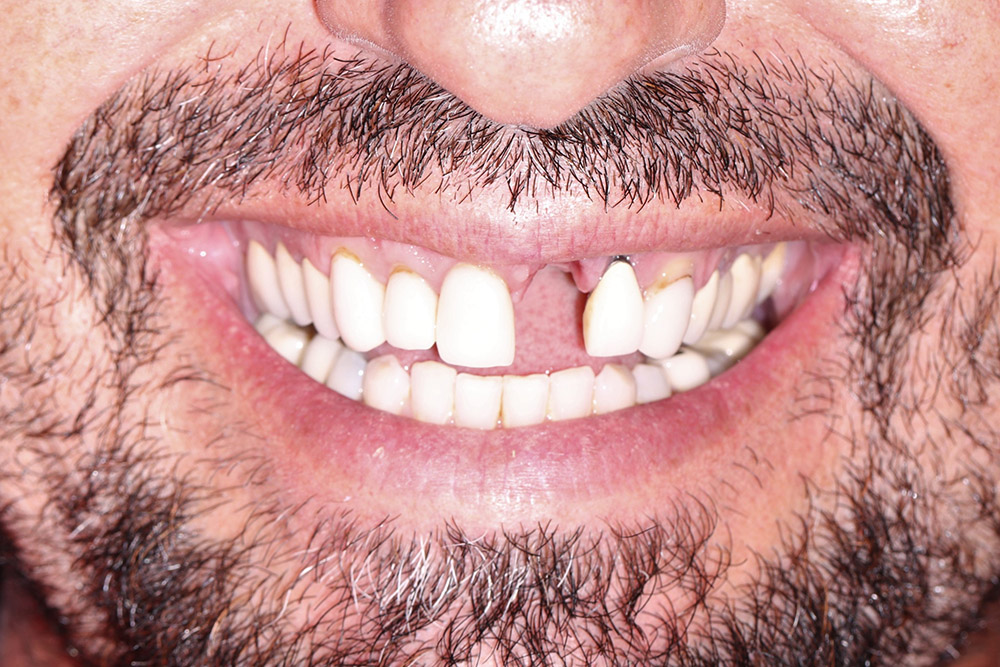
It is common to lose several teeth gradually over the years rather than all at once, and that does not always call for a full-arch solution. This kind of gap can often be closed without grinding down your healthy teeth the way a traditional bridge would, since each post stands on its own. Multiple tooth implants can replace each tooth individually or be connected into a single implant-supported bridge. The right approach depends on where the gaps are and how much bone is available.
An Implant Crown Is the Visible Part That Completes Your New Tooth
An implant crown is the custom-made cap that attaches to the top of your implant post once it has bonded to the jawbone. It is the part that does the actual biting and chewing. It is shaded and shaped to match your surrounding teeth, so it blends in rather than standing out. If you already have an implant post from treatment elsewhere and only need the restoration finished, ask us about an implant crown at your next visit.
An Implant Bridge Replaces Several Missing Teeth Using Fewer Implant Posts
An implant bridge is a middle option between one implant and a full arch, and many patients have not heard of it. It uses two or more implants to support a connected span of replacement teeth. This kind of bridge works well when you are missing several teeth in a row but do not need a full arch. It stays fixed in place, unlike a removable partial denture, and it does not rely on your remaining natural teeth for support. We can help you decide whether an implant bridge or another option fits your case.
Frequently Asked Questions
Will insurance or Medicaid help pay for dental implants?
Most insurance plans and Medicaid do not cover dental implants because they are not considered medically necessary in the same way a filling or an extraction is. We will review your full cost and your financing options with you before any treatment begins, so there are no surprises once treatment is underway.
Do certain health conditions, like smoking or diabetes, rule out dental implants?
Not automatically, but they can affect healing and how we plan your treatment. At your consultation, we review your health history and any medications you take, as both can play a role. If you smoke, we will talk through how that affects healing and what you can do to improve your chances of success.
How many visits does the whole process take, from start to finish?
Plan on somewhere between three and six visits for most implant cases, spread over several months as the implant heals and integrates with the jawbone. Full-arch cases and cases that require bone grafting first may need a few more appointments, and we will map out your specific schedule at your consultation.
What’s the difference between a single implant, an implant bridge, and full-arch implants?
It comes down to how many teeth you are replacing and how they are connected. A single implant stands on its own and replaces one missing tooth. When several teeth in a row need replacing, an implant bridge connects them using just two or more implant posts. Full-arch implants go a step further, replacing an entire row of teeth with a small number of posts rather than one per tooth. Your bone and the number of teeth you are missing will point us toward the right option.
Will I be without teeth at any point during treatment?
Depending on your case, we can often provide a temporary tooth or a fixed healing bridge, like our TeethXpress option for full-arch cases. That way, you are not going without teeth while your implant heals. We will walk through what to expect for your specific timeline before surgery.
Schedule a consultation with our team to talk through your options, or call our Monroe office at 734-241-6166.